#
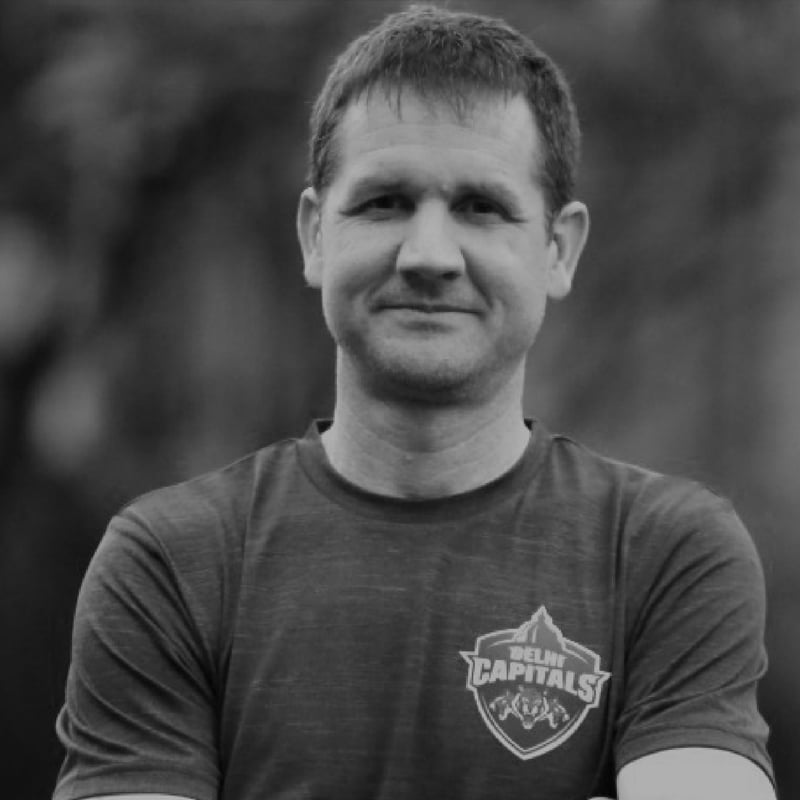
Tim has over 22 years of experience as a Psychologist and Sports Scientist and currently holds the position of Head of Sports Science and Psychology at Chelsea Football Club. In addition, Tim has worked closely with a diverse group of elite athletes from Abhinav Bindra the only Indian Olympian Gold Medallist since 1980, to the Delhi Capitals IPL team. In 2018 Tim was the Team Psychologist to the Saudi Arabia National Football team at the 2018 FIFA world cup.
Tim grew up in South Africa during the 1970s and 80s and observed the successful political change from the apartheid regime to democracy Throughout his career, he’s learnt how powerful effective communication really is. When we disagree, it is often more productive to stop talking about the topic and start talking about the rules of engagement.
He recently published his first book, “10 Rules for Talking: An Expert’s Guide to Mastering Difficult Conversations’. It is packed with great advice from someone who has communicated and coached in high-performance cultures across the globe. The book is about so much more than communication and conversations. It addresses some of the essential themes around personal interaction, how we think, how we express ourselves and create meaning from these interactions. It’s really about how we live our lives and how we can live them better by improving our communication.
In this episode we talk through his life, the lessons from the book and from working with high performing teams.
Summary
(3:18) How growing up in during the apartheid influenced Tim’s outlook on life?
Growing up around deliberate social engineering
Clear memories of social damages
Reflecting on systemic racism today
Advice for white people about how to engage with social injustice
(7:51) The indirect influences from the Truth and Reconciliation Commission about how to have difficult conversations
‘Why is it hard to bring some things out to the open?’
Africa’s linguistic tradition and history of storytelling
Respect the craft of communication
(9:58) Getting into psychology and specialising in sports psychology
‘I wanted to work with talented people’
His personal love for sport
(11:20) Has sports psychology achieved what it has set out to do?
Tim works in an insular environment
Advice to aspiring sports psychologists: not everything is psychological
The myth of ‘everything is possible’
The elite athletes excel in focus
Being practical in the intangible world of psychology
(14:32) Finding the right balance with focus
The System 1 vs. System 2 debate by Daniel Kahneman
(18:34) When to follow our instinctive decisions, outside of the sports realm
‘Many of life’s challenges and dilemmas are recurring’
Experimenting with thinking fast and slow
(21:15) How to increase our focus in day to day life
Focus is like a torch beam ‘ consider its brightness, breadth, and direction
Practice self-awareness and regular reflection
Lessons from playing squash ‘ it’s 100% focus on the power through the wrist
Education falls short by not teaching students what to concentrate on
(26:18) Flow vs effort with focus
Knowing when to apply System 1 and System 2
(28:32) Working with goalkeepers to boost their performance
Previously coached football
The biggest challenge for goalkeepers: they carry the can a lot of the time
Goalkeeping is measurable but not totally manageable
The parallels with investment world in terms of uncontrollables
(31:48) Does the mind give up before our bodies? Looking at older cyclists
We can’t run ourselves to death: we’re hunters
Long-term physical stress from endurance sports
‘Don’t injure yourself, don’t scar your heart. As long as you can avoid those, you can have an extremely long and happy sporting life’
The effect of becoming de-trained is much stronger than the effect of ageing
(35:53) Communication across different cultures
The calibration issues when understanding different cultures
It’s not always East vs West: e.g. similarities between Italian and Indian cultures
Every culture values privacy and inclusion: can’t have them at the same time
‘Culture is just a veneer on top; underneath people are the same’
(40:59) Techniques and approaches when coaching people for the first time
‘The athlete you’re talking to already has a theory of sports psychology’
The need for careful listening
(43:14) Taking on new ideas and skills in the run-up to a major event
It can be detrimental to performance
There’s the temptation to change, but in pressured moments keep the same
(44:52) Heart Rate Variability and breathing techniques
Parasympathetic and sympathetic nervous systems need to be in balance
Regulating your own arousal levels through breathing
Having an easy and a hard pace like pro cyclists
(49:26) Athletes communicating with each other
Provide emotional support when you can’t physically
The skill of communicating practically in a sport like football
(51:56) The purpose of communication
The different objectives of conversations: factual, forecast, value, allegiance
The problem with political conversations when they’re both factual and allegiance
(56:20) Verbal and non-verbal cues
Building the flow between System 1 and System 2 ‘ allow them to communicate with each other
Gaslighting blocks communication
(1:00:53) What’s the best way for white people to talk about diversity and inclusion?
Recognise that white people are part of the equation
Whiteness affects your circumstances
Learning from the book ‘White Fragility’: ‘You’re not necessarily the luckiest person in the world, but it’s not because you’re white’
(1:04:56) The inspiration behind writing the book and writing process
On lacking certain skills in talking, writing serves as another way to communicate
Ben Lyttleton’s books ‘Edge’ and ‘Twelve Yards: The Art & Psychology of the Perfect Penalty’
Initially an unconfident writer, he discovered he loved the process
(1:08:29) Why do we need rules in conversations?
We need rules when we get stuck
(1:10:09) The motivation formula
Learning from a house gecko
Motivation comes from being more confident, more rewarded and less tasked
(1:13:18) Ways to improve confidence
Step out of the binary world of success/ failure
Confidence isn’t about being black or white, but accepting the shades of grey
(1:15:11) Dealing with disputes
We fight because we lack social skills, not because one is good vs bad
‘Conflict is a consequence of our well-intentioned failure to manage multiple agendas’
Learn to recognise bad traits like selfishness and deliberate untruthfulness
The warning signs of Donald Trump
Strive for fewer false positives
(1:18:50) Using communication effectively for bad reasons
We talk to identify who has the best idea
‘Competing ideas are best resolved in a governed environment’
Having no space to cheat, like in football: it’s governed by referees, spectators, players and rules
(1:22:18) How do we agree on truth?
Rule 1: agree what you’re talking for
The need to have an agreed method/ process for discovering the truth
Extend the scientific method to complex social issues
(1:26:36) The skill of stress-testing truth from conversations
It needs to be taught at school from a young age
Critical thinking prioritises truth over opinion
Collaboration to find the truth
1:128:14 The role of resilience in conversation
Resilience is not about coping with more
Don’t be quick to judge what stressed people are going through
(1:32:22) Enhancing personal relationships through better communication
John M. Gottman’s ‘Seven Principles for Making Marriage Work’
Focusing on the good qualities of each other
We need people to turn to
(1:35:59) Understanding the PERMA acronym
Positive emotion, Engagement, Relationships, Meaning, Accomplishment
Formed by Martin Seligman
We need all of these things in order to have satisfying lives
Have multiple sources of these categories
(1:39:50) Working in a remote world: how can we avoid our written word from being misconstrued?
Humans look for patterns, which means we’re good at making stuff up
(1:41:46) The four types of conversationalists
Piers Morgan is a typical escalator
Escalation can be used for the greater good, e.g. at an unfair trial
Storytellers: Boris Johnson draws vivid pictures but can lack vigour
Safety: conversations are only safe when both parties are safe
The Analyst can also benefit from learning how to tell stories
We want to use all the conversation styles
(1:45:55) Some of the best communicators in the public realm
Jacinda Ardern, Angela Merkel and Justin Trudeau
Rishi Sunak: factual but good storytellers
Dave Brailsford communicates difficult stories e.g. Chris Froome
Lewis Hamilton: social and personal awareness
(1:47:30) What are the effects of good listening?
‘You can’t have a conversation without listening’
It’s an act of inviting
Why do we sometimes not listen?
(1:50:17) How to have difficult conversations
Have the confidence in your ability to build safety in a conversation
4 real safety skills: commitment, contrast, perspective, apology
Get everyone to accept that there are rules that benefit communication
Review the rules to see which ones you disagree with
Consider the flip-side: how could the conversation be better without rules?
Follow the podcast
The 1% Podcast brings together the 3Ps of People, Professions and Performance. We chat to top-class performers from eclectic areas (sport, business, politics, art etc.) to extract the tactics, tools and routines you can use to get 1% better and achieve success.
" height="24px" id="v04r379mL" transform="translate(2 0)" width="19.536000000000005px"/></svg>)
" height="23.999264284236244px" id="ghOdDMk_v" transform="translate(0.001 0)" width="24.000264254861435px"/></svg>)