#
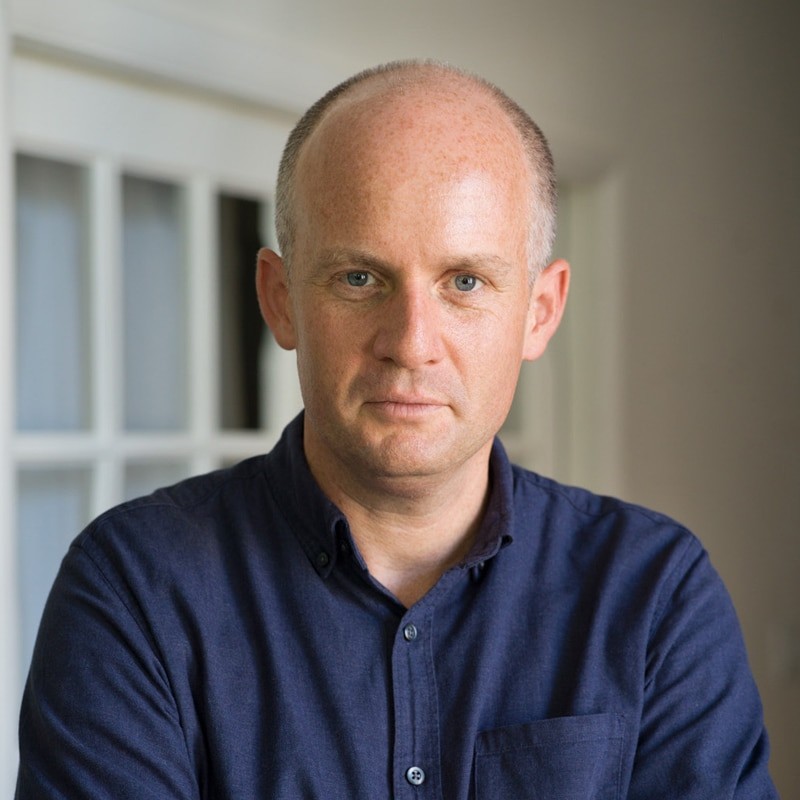
For 14 years, our guest for this week’s The 1% Podcast wrote a weekly piece for The Guardian entitled: ”This Column Will Change Your Life’.
If that doesn’t pique your interest, Oliver Burkeman has gone on to write three books to assist us with some of life’s biggest challenges. “Help! How to Become Slightly Happier and Get a Bit More Done” was published in 2011, with “The Antidote: Happiness for People Who Can’t Stand Positive Thinking’ published in 2012.
It’s Oliver’s third book though, entitled: “Four Thousand Weeks: Time Management for Mortals”, that has garnered significant praise since being published in 2021 “ and reinforced the author’s reputation as a thought-provoking writer on the so-called “search for happiness”, the limits of modern-day productivity, and how our relationship with time actually tells us more about ourselves than we’ve ever realised.
Summary
(4:11) How Oliver got into journalism
He always had a copy of the Guardian at the breakfast table growing up
He had his own column at the Guardian for 14 years
On the relationship between reader and columnist
(11:00) Why Oliver stopped the Guardian column in 2022
Ending one project opens the door for another project
On being a risk-averse, cautious person, but still embracing the insecure path at work
(14:30) On how the book ‘Four Thousand Weeks’ has been received by the general public
It’s had huge positive reviews
Writing the book is ‘the advice that [Oliver] needs to hear’
Oliver’s hunch is that when you write about timeless issues through a personal lens, it improves the chances of resonating with a lot people
(17:46) On adapting time management approaches when switching from working in the office to the home environment
‘The pandemic robbed us of our navigational aids’
Consider having more resilient plans that don’t require absolute control of your day
Oliver makes time for deep focus work, which is about four hours in the morning
(23:18) The problem with focusing too much on efficiency
‘It leads to more stress and busyness, and less focus on the things we care about’
Efficiency is infinite, so it will never be a solution
Focus your attention and energy on things that matter
(27:33) Our relationship with time
Society has conditioned many of us to relate to time in an instrumental way, i.e. the value of an hour is determined by whether or not it gets us to certain crucial goals
(30:35) The art of single-tasking
Multi-tasking is a way for people to feel in control
Build the muscle of neglecting other tasks so you can focus on one at a time
(33:04) The ‘Efficiency Trap’
‘A million different tactics can be helpful but the most important thing is the spirit in which you use them’
Organise two to do-lists: one long list, and a capped list
Keep a ‘done’ list to visualise what you have achieved
(37:31) The section in Oliver’s book about Jennifer Roberts’ Art History assignment for her students at Harvard University
The challenge was to sit and look at a painting and sculpture for three hours without a break
Oliver undertook it at the Harvard Art Museum and it really helped him to slow down
So many of us suffer from impatience so we need frameworks to helps us slow down
Art appreciation needs to be done slowly
(42:16) Being more present with your family
Parents try to ensure the best possible future for their children rather than focusing on the here and now
Retired grandparents are much more present with their grandchildren
It’s good to remind yourself regularly to bring things to the present moment
We all have a choice with how we spend our time
(45:00) On time pressure
There is evidence for the claim that people don’t want as much agency over their time as they think
Understanding Terry Hartig’s research from Sweden on emotional well-being and time pressure
‘Time is most valuable when it’s most well-coordinated with other people’
The notion of ‘Collective Restoration’ is when everyone is having a break at the same time, e.g. summer holidays
(51:10) Reconciling the idea that time doesn’t make room in your day ‘ we have to make room for it
It seems that higher productivity and technology has freed up time for the average person ‘ but rather than using that extra time for leisure, people use it to become even more productive
We use time to be ‘busy’, what social psychologists call ‘Idleness Aversion’
Work around the time that you have, not the work or tasks that you need to do
(54:10) Atelic activities
Atelic activities are done for their own sake, not in order to achieve a particular end
Nassim Taleb said: ‘My only measure of success is how much time I have to kill’
Having a hobby is a great way to inherently enjoy doing an activity
Follow the podcast
The 1% Podcast brings together the 3Ps of People, Professions and Performance. We chat to top-class performers from eclectic areas (sport, business, politics, art etc.) to extract the tactics, tools and routines you can use to get 1% better and achieve success.
" height="24px" id="v04r379mL" transform="translate(2 0)" width="19.536000000000005px"/></svg>)
" height="23.999264284236244px" id="ghOdDMk_v" transform="translate(0.001 0)" width="24.000264254861435px"/></svg>)