#
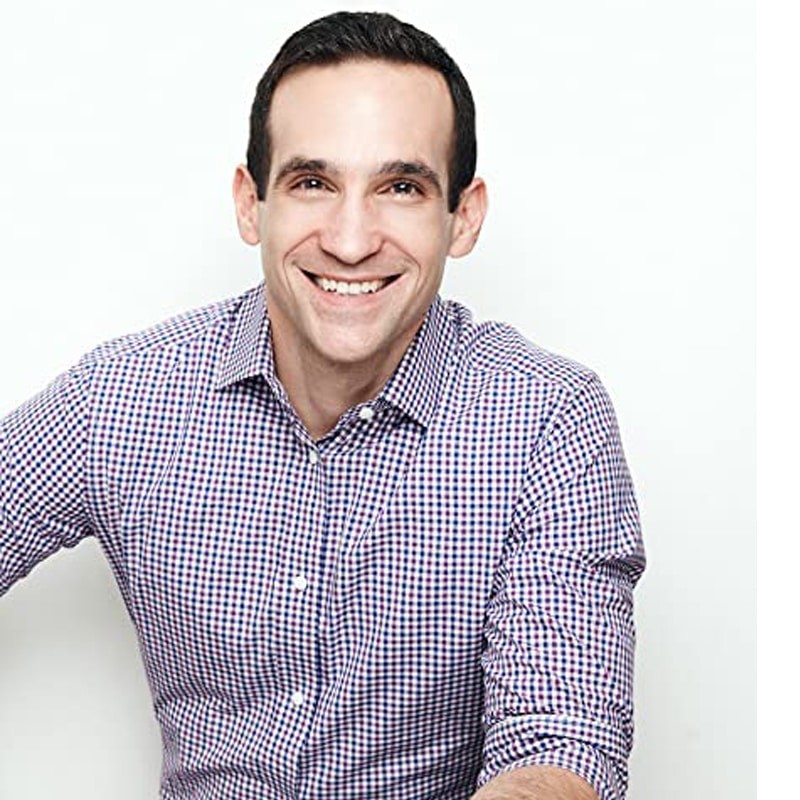
Nir Eyal is an Israeli-born American author, lecturer and investor. He writes, consults, and teaches how psychology, technology, and business intersect. His science-based insights build healthy habits, improve productivity and focus, and manage distraction. He was a lecturer in Marketing at Stanford. He is a Wall Street Journal Bestselling Author of “Hooked” and “Indistractable”.
“Indistractable” received critical acclaim, winning the Outstanding Works of Literature Award as well as being named one of the Best Business and Leadership Books of the Year by Amazon and one of the Best Personal Development Books of the Year by Audible. In addition to his blog at NirAndFar.com, Nir’s writing has been featured in The New York Times, The Harvard Business Review, Time Magazine and Psychology Today.
Nir has spent over 5 years researching the area of distraction and is recognised as a thought leader on habit-forming technology. Nir invests in habit-forming products that improve users’ lives. Some of his past investments include Eventbrite, Focusmate and Canva.
Summary
(02:23) What drew Nir to researching distraction
He was often distracted at work, with family, etc.
‘Looking for distraction is easy to find’
(06:04) What we mean by ‘distraction’
‘The antidote to impulsiveness is forethought’
Distraction is not a character fault
It’s important to understand what distracts you
The three causes of distraction: internal, external or a planning problem
(08:54) On writing ‘Hooked: How to Build Habit-Forming Products’
A habit is an impulse to perform a behaviour with little or no conscious thought
Nir wanted to help people understand how companies like Facebook or Google built products that get people hooked
You can use the principles for anything, e.g. get children hooked on online learning, people to complete an exercise program, etc.
Technology is not to blame
(12:22) The deeper roots of distraction
The opposite of distraction is traction
‘Trahere’ in Latin means ‘to pull’
Distraction pulls your further away from your goals
Stop judging how people spend their time
At work, many of us focus on the easy tasks first
Email is a big distraction
(17:34) Internal distractions
Become conscious of your triggers as quickly as possible
Explore your sensations with curiosity
Blamers, shamers and claimers
The ten-minute rule
Abstinence makes you want to have something more
Tell yourself ‘not yet’
(26:05) Pain management
Everything we do is to avoid discomfort
‘Time management is pain management’
(28:23) Cognitive enhancers and nootropics
Know the difference between the effect and the size of the effect
Focus on what moves the needle
‘Plan your day before taking pills’
(31:33) Time boxing effectively
The flaws of to-do lists
‘You can’t output without input’
Avoid time-switching
People are bad at estimating how long things will take to be done
Multi-channel multi-tasking, e.g. listen to an audiobook whilst walking
(39:31) Getting into the flow state
‘I think flow is oversold’
It is the opposite of deliberate practice, e.g. 10,000-hour rule
(43:45) Temptation bundling
It is substituting a reward from a different unrelated behaviour as the immediate gratification
The Stanford marshmallow experiment
Be careful of labelling yourself and your self-limiting beliefs
‘We should be cheap with our time but generous with our money’
(55:22) The role of extrinsic motivation
It is powerful for temporary tasks
Find intrinsic motivation for longer-term goals
(57:06) Distraction in the workplace
Slack is a great company that is ‘indistractable’
The three key qualities for an ‘indistractable’ workplace: psychological safety, having a forum, and leading by example
Slacks’ motto is ‘work hard and go home’
(1:01:32) Build more social connection
Plan ahead
The loneliness epidemic
Dedicate regular time
Follow the podcast
The 1% Podcast brings together the 3Ps of People, Professions and Performance. We chat to top-class performers from eclectic areas (sport, business, politics, art etc.) to extract the tactics, tools and routines you can use to get 1% better and achieve success.
" height="24px" id="v04r379mL" transform="translate(2 0)" width="19.536000000000005px"/></svg>)
" height="23.999264284236244px" id="ghOdDMk_v" transform="translate(0.001 0)" width="24.000264254861435px"/></svg>)