#
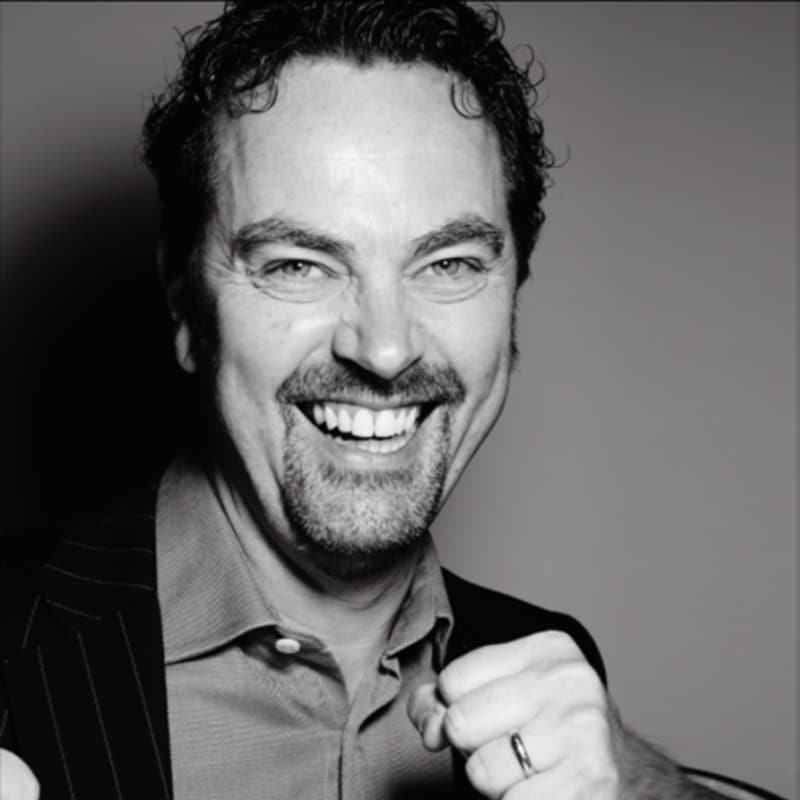
Our guest today is Martin Brooks. Martin is a top communications coach, author and speaker who specialises in how to use your body language more effectively when communicating.
Our nonverbal behaviour or body language affects how others see us. But it may also change how we see ourselves, and therefore how we use our bodies can have an impact on our minds. Learning to decode nonverbal communication can help us understand other people’s thoughts and feelings, and it can help us make ourselves better understood, too, whether it’s friends, family, colleagues, or strangers. There is a wealth of meaning in the body language of those around us, and most of us aren’t even aware it exists.
Martin discusses his approach to decoding body language, and how to open up a world of understanding and communication, by being able to gauge more easily what a partner, client or colleague is genuinely thinking or feeling.
Summary
Constantin grew up 2:47 Martin once said: ‘It is my mission in life that people should be rewarded in line with their potential, not just how well they can communicate.’ Why is this a driver?
The quietest people in the room often have the most value to share
It’s about creating a level playing field, where everyone’s voice is heard
(5:03) The most common instances where poor body language holds people back
Human beings are visually orientated
First impressions are particularly important
To recover from a bad first impression, it takes on average twenty-two good second impressions after that
(8:45) How to recognise that your body language is sending off the wrong signals
Consider how you look and sound
Low level of self-awareness
Record yourself and watch without sound to review how you come across
Define what effective communication looks like
Awareness, assessment and application
(14:14) Is body language a cultural construction?
E.g. eye contact is positive in the West but negative in the East
Innate body language, e.g. a baby smiling
Learned body language comes from our environment, e.g. the tone your parent uses
(18:44) Micro expressions
They are facial expressions that occur within a fraction of a second
They are a lot harder to spot and read
When we are reluctant to do something, it’s often because our brain has recognised that something is ‘off’
‘Communication congruence’ is when what someone is saying and their body language are aligned
‘Duping delight’ is when someone thinks they gotten away with lying
(26:05) Is there a link between high emotional intelligence and reading body language?
It is often linked, as you use the cues given to you
Women are often better than men at reading body language
(35:40) Learning to communicate with his daughter
She was born with cerebral palsy
Eye pointing helped aid her to express herself
We all have the desire to be understood
(43:03) How can we communicate more confidently?
Martin’s background is in presenting
Confidence is not tied in with our identity
(48:50) Martin’s biggest influences
Paul Eckman on micro expressions
Dr Peter Collett who was the on-site psychologist on the TV series Big Brother
(53:45) Which part of Barack Obama’s body language is innate versus learned?
He has learnt ‘the thumb of power’
Learning a skill eventually becomes auto-pilot so it looks natural
Every behaviour, apart from crying, is learned
(56:10) The most effective forms of body language to use in the business world
Learn how to show up best virtually
The power of maintaining eye contact and smiling
Have the camera at eye level
Eyebrow flashes are a reconnection signal
(59:04) The Body Language Decoder card deck
50 cards to help you decode people’s thoughts and feelings
Body language is visual
Duping delight is Martin’s favourite card
(1:02:49) How to interpret gestures
Four distinct types of gestures: confidence, suggested action, meaning, supporting
According to Martin, there are 46 different hand gestures
(1:06:33) On deception
People generally avoid eye contact when they’re being deceptive
Observe what people do when discussing a sensitive topic, e.g. a change in their blink rate
Frequent liars often use too much eye contact
(1:09:27) Is the virtual world having an impact on our body language?
Zoom fatigue comes from the lack of motion
‘We respond to our environment’travelling abroad and saw what existed outside of the Soviet Union
Follow the podcast
The 1% Podcast brings together the 3Ps of People, Professions and Performance. We chat to top-class performers from eclectic areas (sport, business, politics, art etc.) to extract the tactics, tools and routines you can use to get 1% better and achieve success.
" height="24px" id="v04r379mL" transform="translate(2 0)" width="19.536000000000005px"/></svg>)
" height="23.999264284236244px" id="ghOdDMk_v" transform="translate(0.001 0)" width="24.000264254861435px"/></svg>)